If you've visited a childcare centre or spoken to an early childhood educator, you've likely heard the term 'EYLF'. The Early Years Learning Framework — officially titled 'Belonging, Being and Becoming' — is the Australian Government's national curriculum framework for children from birth to 5 years. But what does it actually mean for your child's day-to-day experience?
The three big ideas
The EYLF is built around three concepts that capture what early childhood should feel like:
- Belonging — children feel connected to family, community, and culture. They know they are valued and that they matter.
- Being — childhood is not just preparation for the future. Children have the right to experience joy, wonder, and play in the present.
- Becoming — children are constantly changing, growing, and learning. The EYLF supports this journey without rushing it.
The five learning outcomes
The EYLF identifies five broad learning outcomes that guide educators in planning and assessing children's learning:
- Children have a strong sense of identity
- Children are connected with and contribute to their world
- Children have a strong sense of wellbeing
- Children are confident and involved learners
- Children are effective communicators
The EYLF doesn't prescribe what children should learn or when — it describes the conditions and experiences that support rich, meaningful learning. This is why play is so central to quality early education.
What this looks like in practice
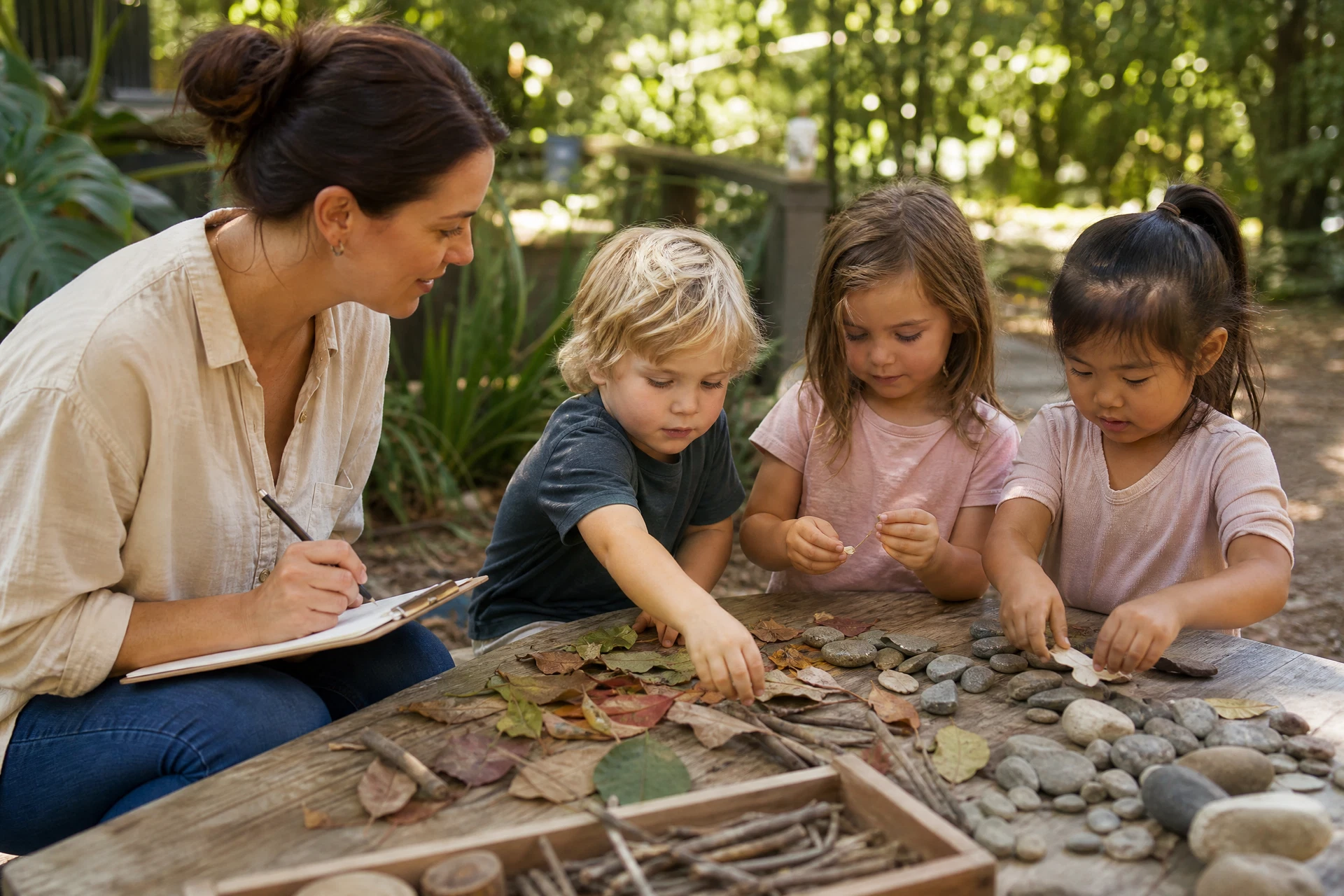
At Jenny's ELC, the EYLF guides everything from how we set up our rooms to how we document children's learning. When a child spends 45 minutes building a tower and knocking it down, our educators aren't just supervising — they're observing, extending, and documenting the mathematical thinking, persistence, and physical development happening in that moment.