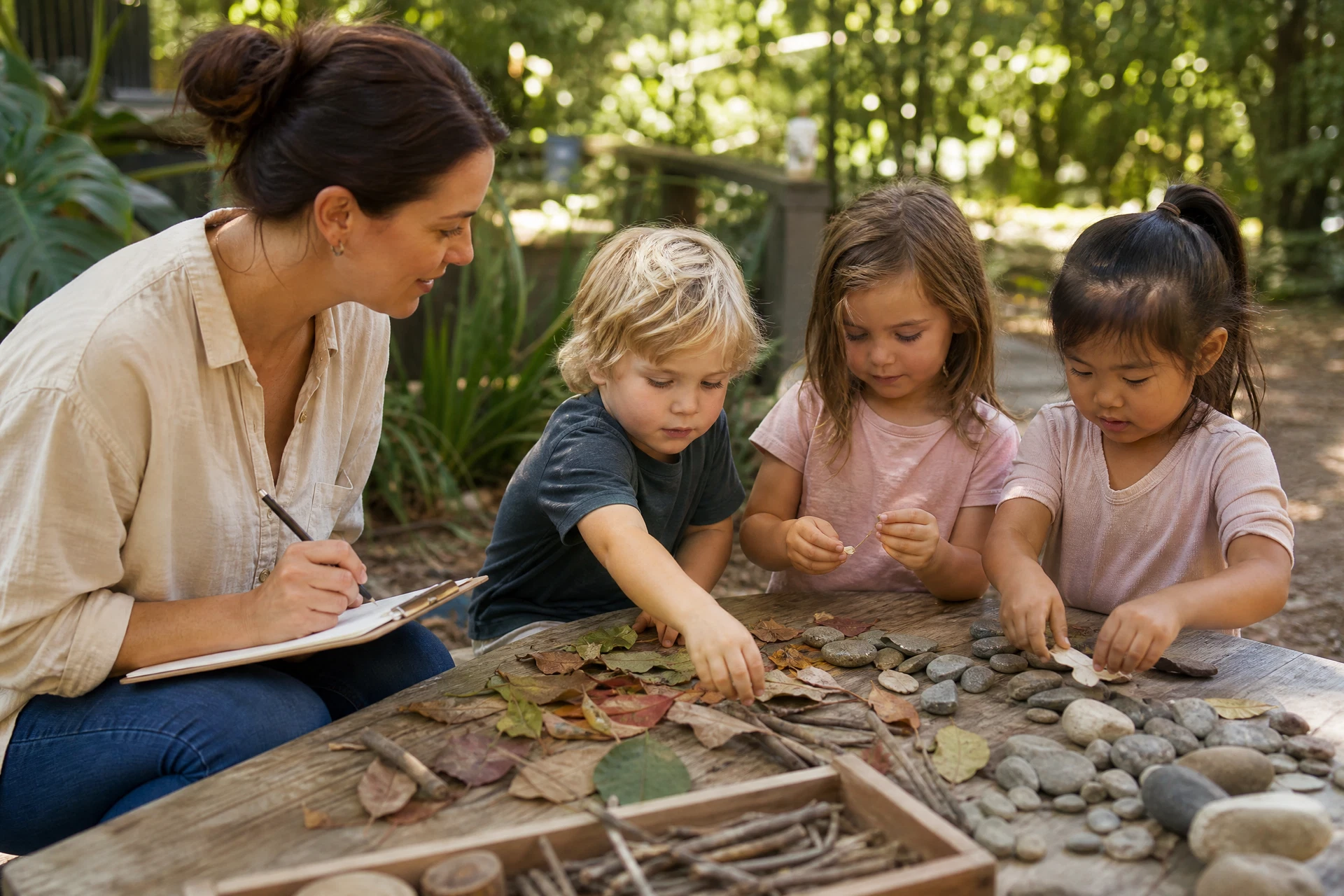
When parents see children at a childcare centre building with blocks, painting, or playing in the sandpit, they sometimes wonder: 'Is this really educational?' The answer, backed by decades of research, is an unequivocal yes. Play is not a break from learning — it is the primary vehicle through which young children learn.
What the research says
A landmark study by the University of Melbourne found that children who experienced high-quality play-based early education showed significantly better outcomes in literacy, numeracy, and social-emotional skills at age 8 than children who had received more formal, academic instruction. The benefits of play-based learning compound over time.
What children learn through play
- Mathematics: sorting, counting, patterns, spatial reasoning (blocks, puzzles)
- Literacy: storytelling, vocabulary, print awareness (dramatic play, books)
- Science: cause and effect, hypothesis testing (water play, experiments)
- Social skills: negotiation, empathy, conflict resolution (group play)
- Emotional regulation: managing frustration, persistence, resilience
- Physical development: fine and gross motor skills (art, outdoor play)
The difference between play and 'just messing around' is intentionality. Quality educators don't just supervise play — they extend it, enrich it, and use it as a window into each child's thinking and development.